Crystal lattices
Definitions
A geometrically perfect crystal is a set of ions with a regular spatial distribution defined by a repeating or periodic array on long range distance.
Generally speaking, this arrangement or structure is described by:
a crystal lattice defined by a set of nodes;
an elementary pattern (generally, in metals and inert gases, the elementary pattern contains a single atom, but there are structures whose patterns contains over 1000 atoms).
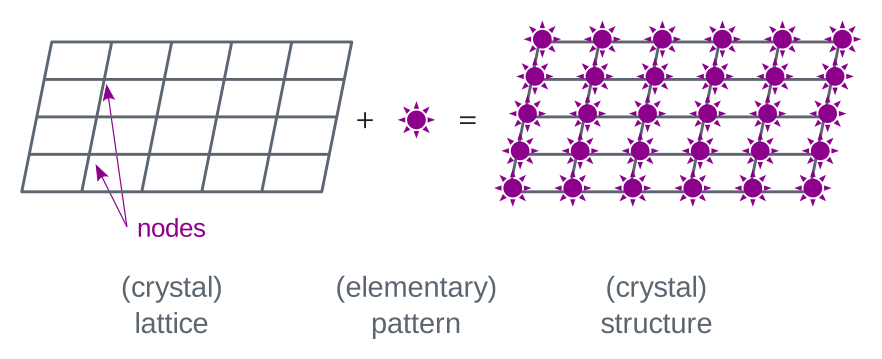
The unit cell is the parallelepiped defined by the three primitive vectors \(a\), \(b\) and \(c\) also referred to as lattice parameters. Note that the angles between vectors \(a\), \(b\), and \(c\) can be random. The position of a given vector in the lattice is given by the vector \(r = ua + vb + wc\) (with \(u\), \(v\) and \(w\) as whole numbers), which generally represents a translation of the lattice.
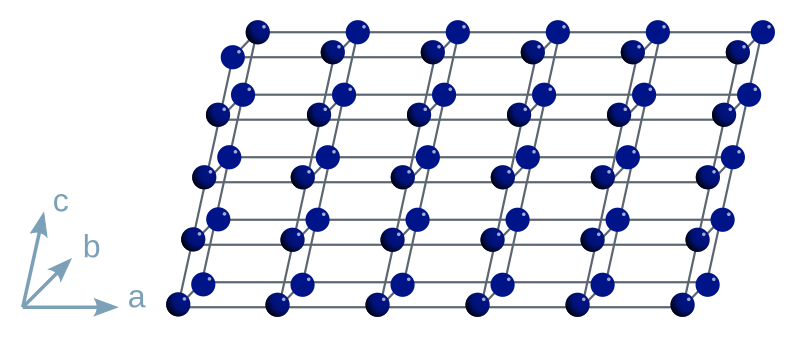
Certain symmetrical operations leave the crystalline structure invariable. The operations comprise the lattice translations described above but also rotations and symmetries called point transformations. Rotations are of the order of 1, 2, 3, 4 or 6 according to whether they correspond to angles of rotation of \(2\pi/1\), \(2\pi/2\), \(2\pi/3\), \(2\pi/4\) or \(2\pi/6\) radians.
Bravais lattices
Introduction
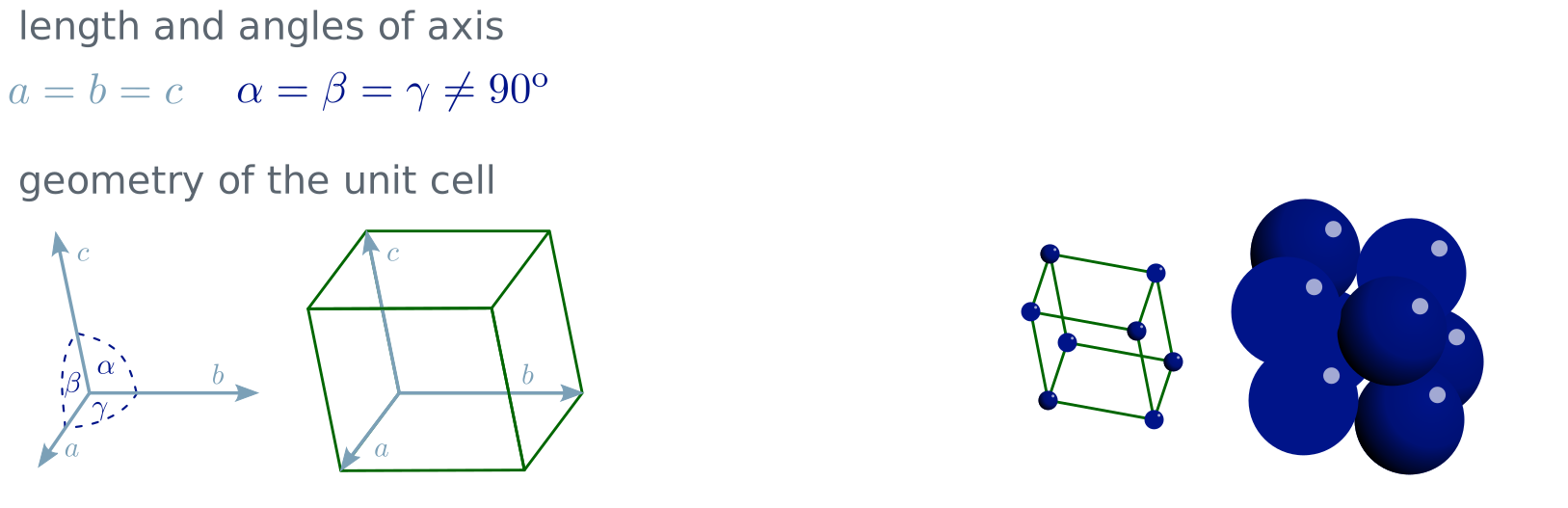
Depending on the relations established between \(a\), \(b\) et \(c\), and \(\alpha\), \(\beta\) and \(\gamma\) (the angles between \(a\), \(b\) and \(c\)),
all crystal lattices can be described based on 7 unit cells that define 7 crystalline systems. Depending on whether the unit cell is single or multiple (we refer to unit cell multiplicity), and based on these 7 crystalline systems, 14 Bravais lattices are defined.
These different lattices are illustrated below.
Cubic system

Hexagonal system
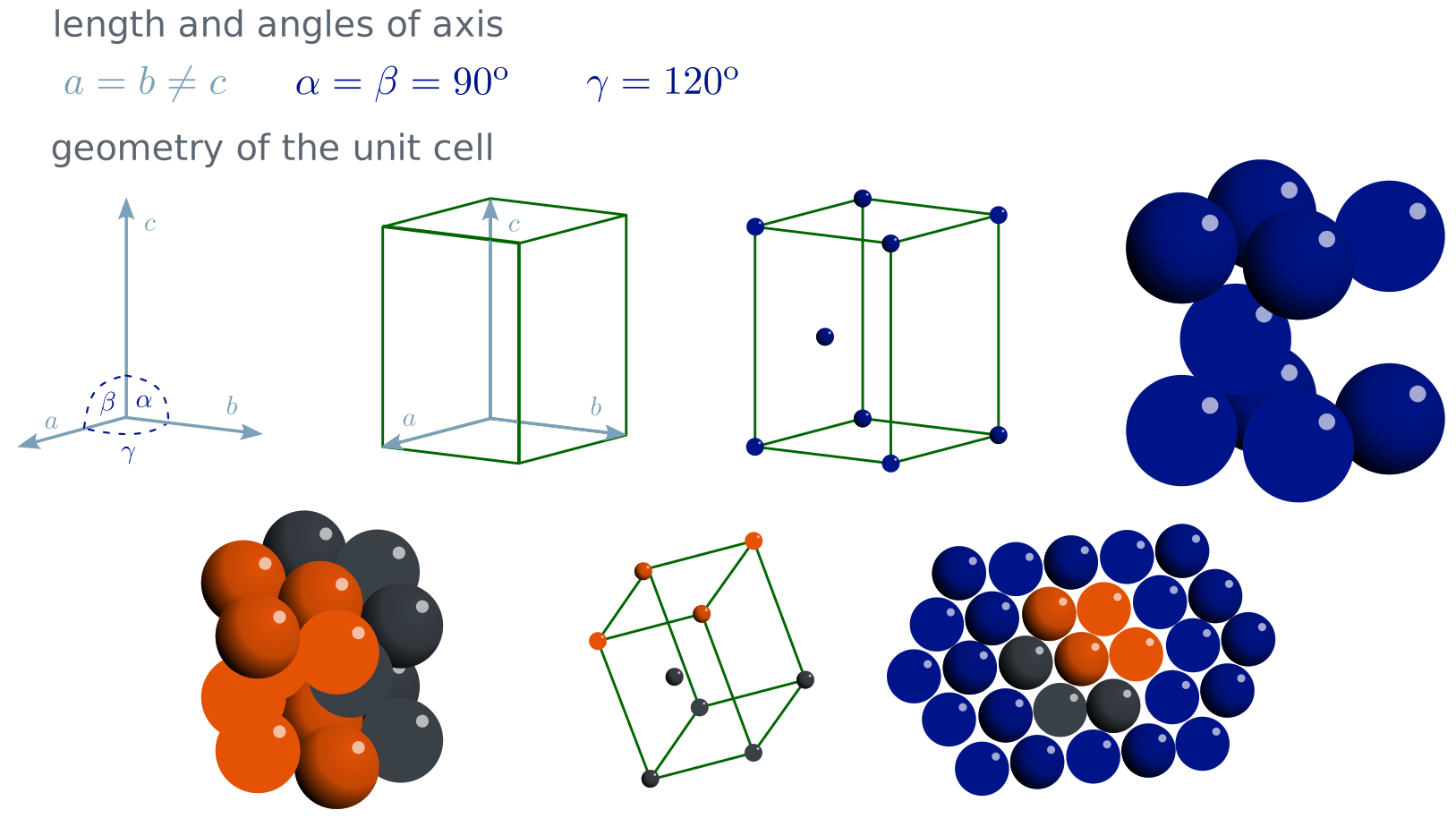
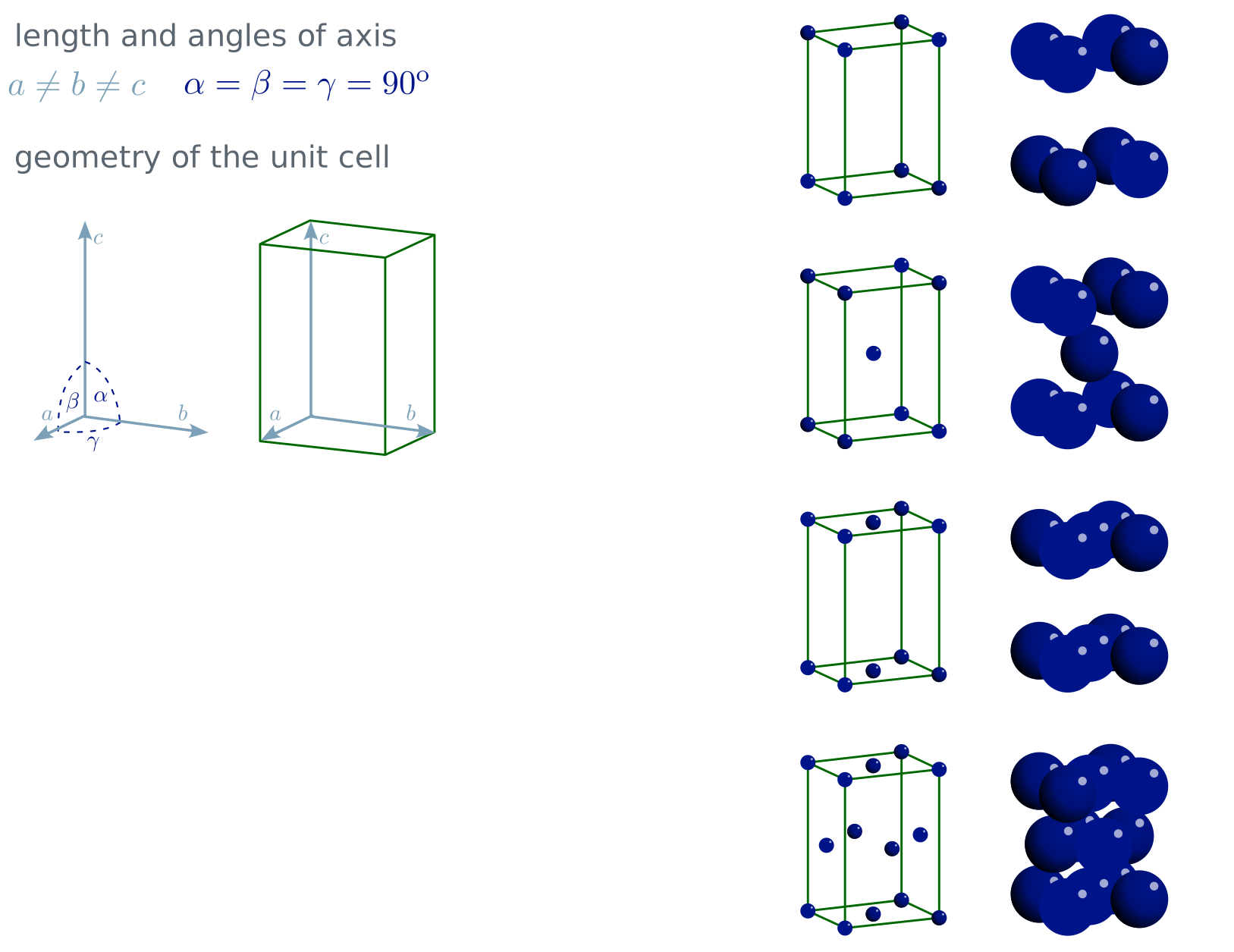
Orthorhombic system
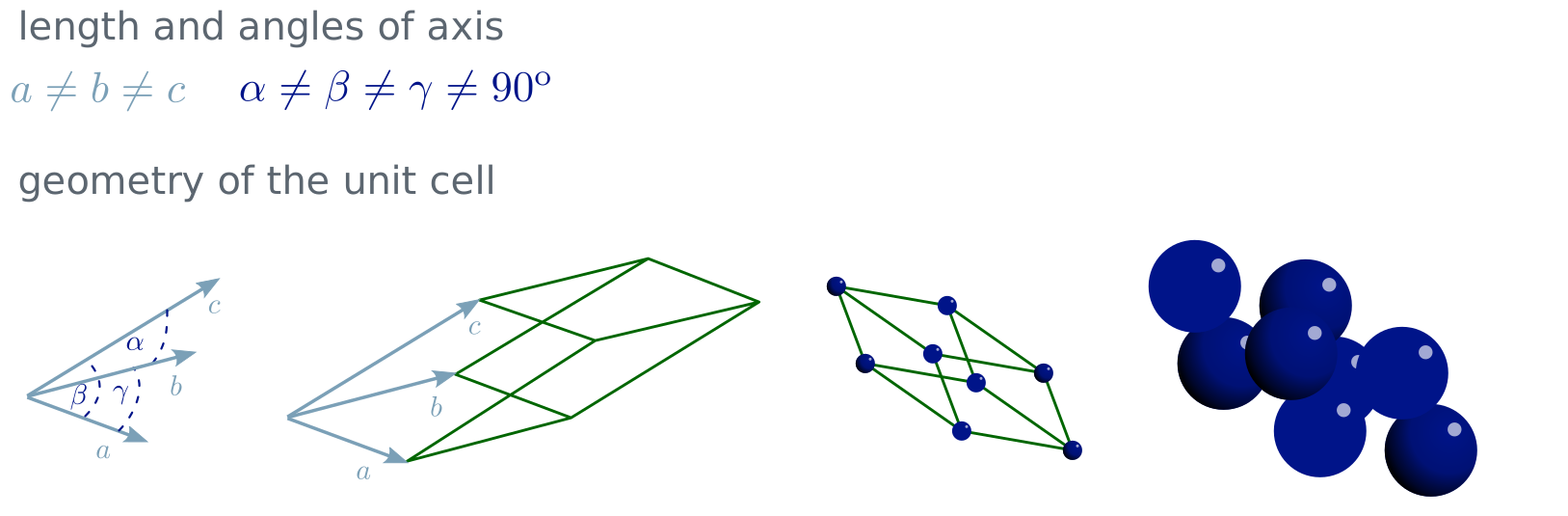
Triclinic system
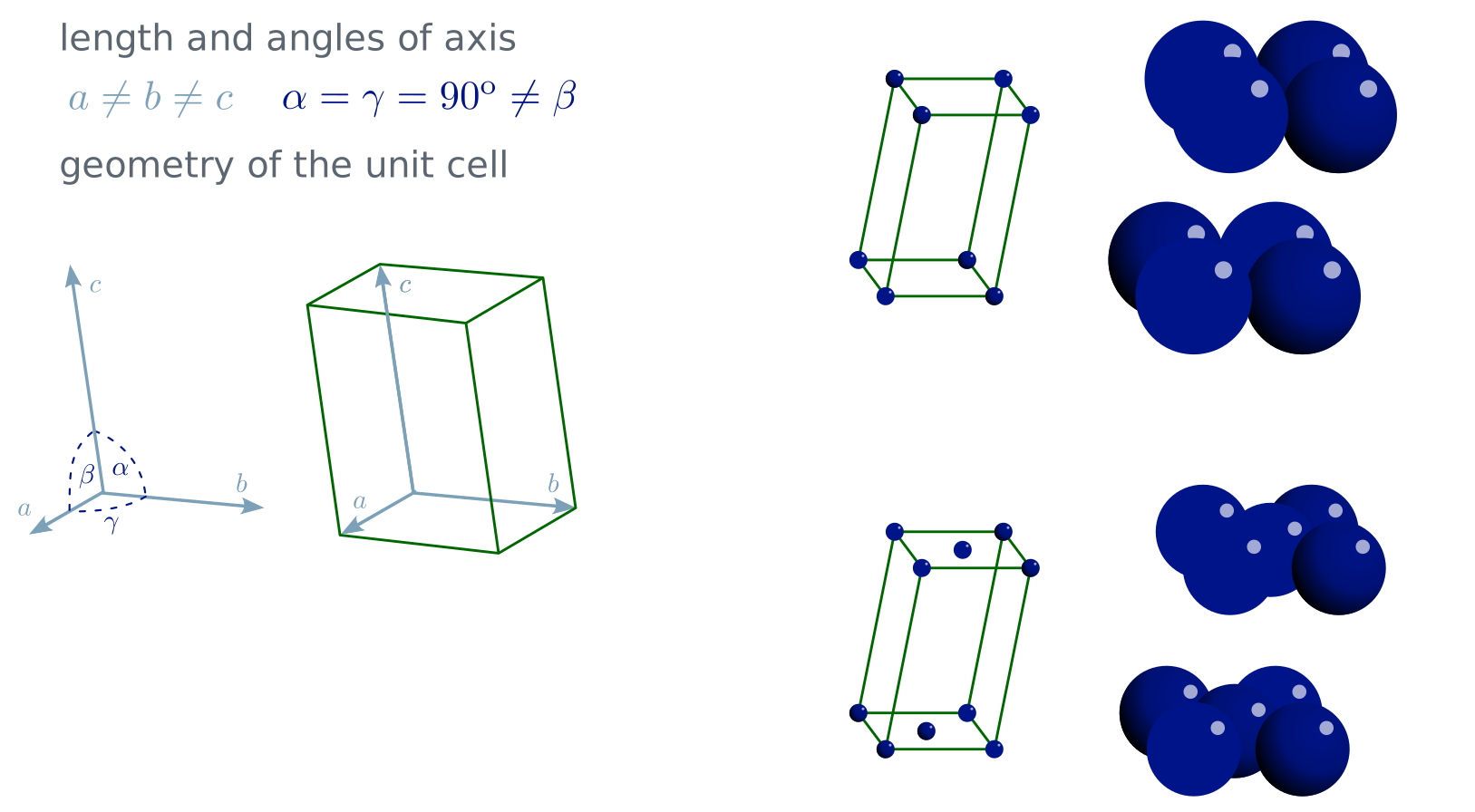
Monoclinic system
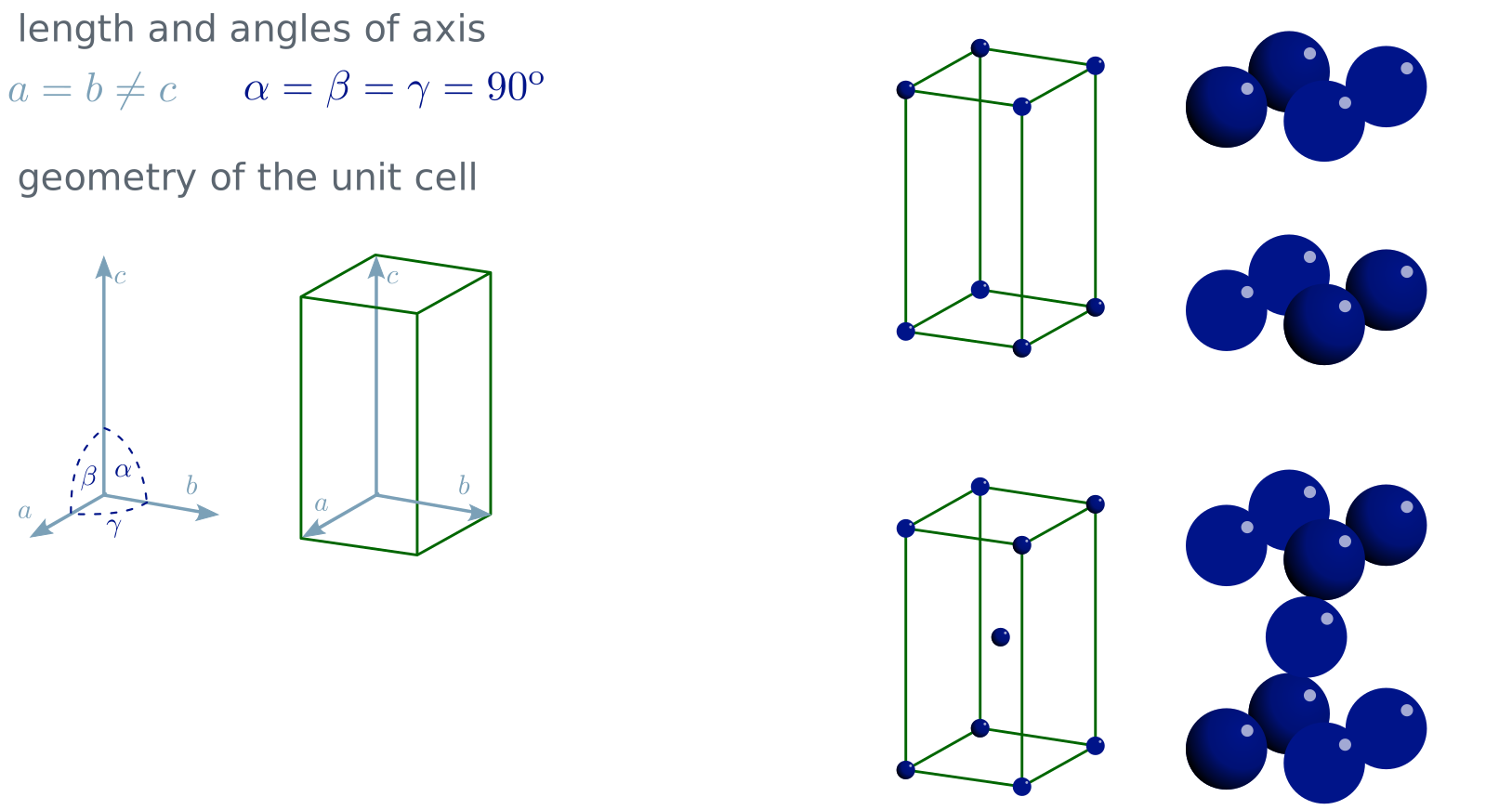
Tetragonal system
Rhombohedral system
Conclusion
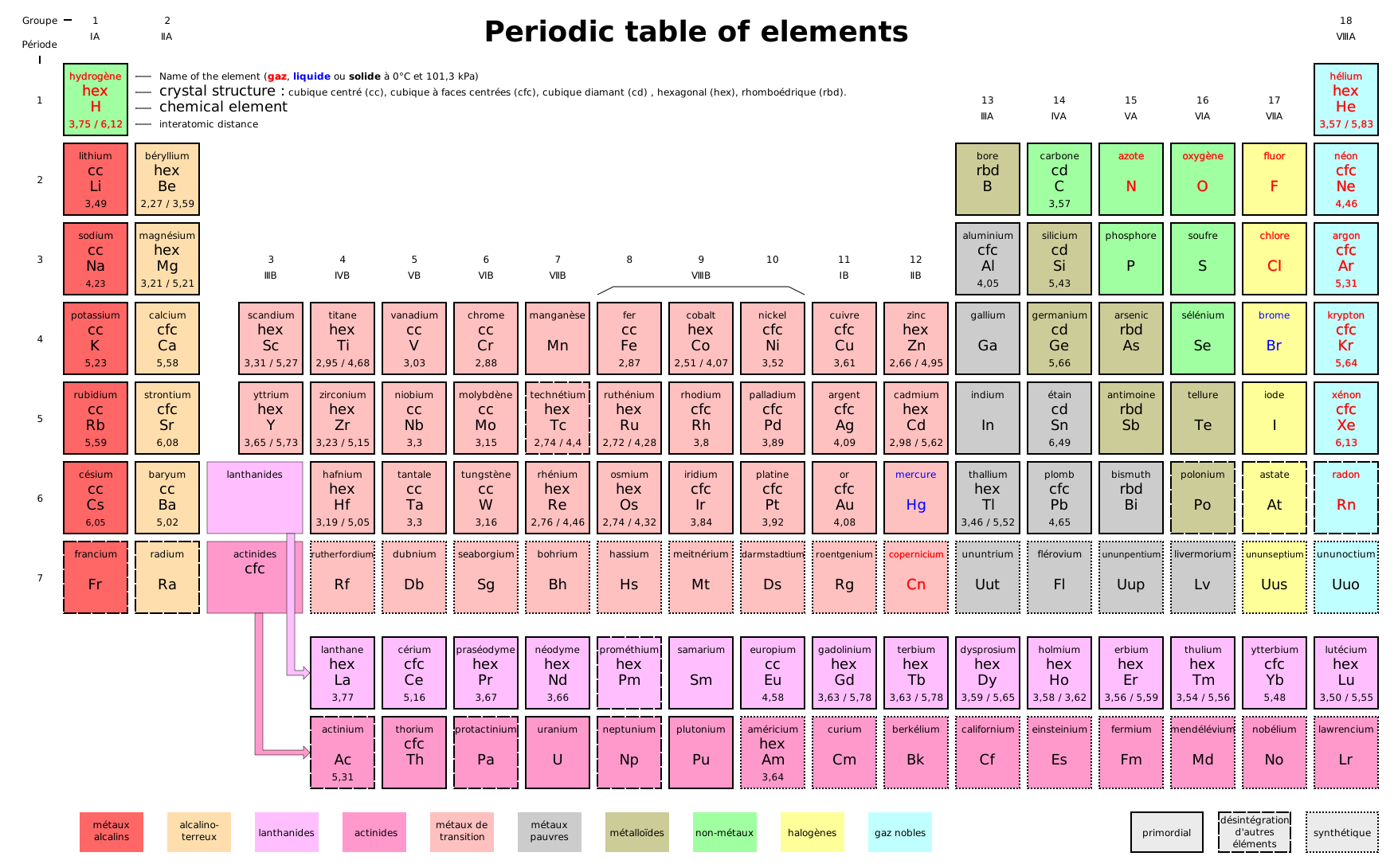
For information purposes, the following table provides the crystal structure and unit cell parameters of elements in the periodic table.
The diamond cubic structure results from interpenetration of two face-centred cubic unit cells offset by \(a/4\), \(b/4\) and \(c/4\) (it has 8 atoms per unit cell).