fracture surfaces
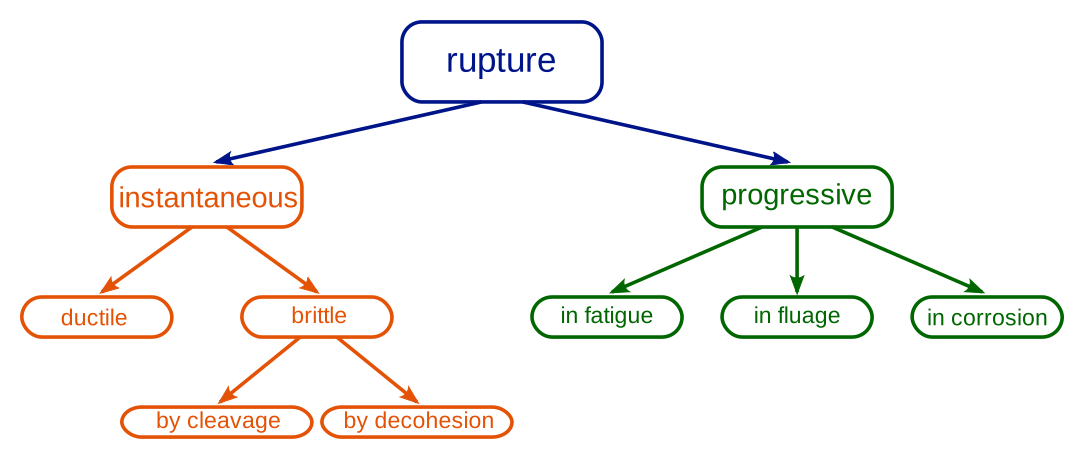
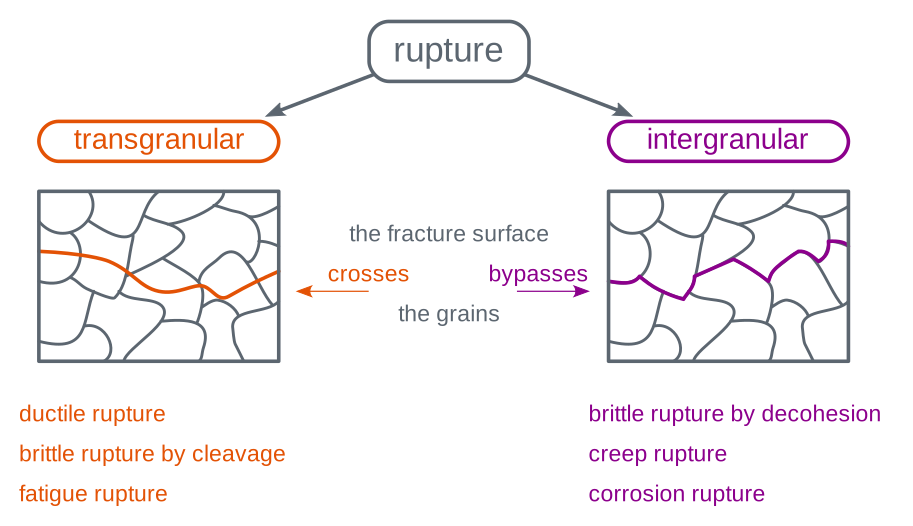
Fracture surfaces in a test piece can be classified according to two distinct criteria related to their kinetics (see figure) and to observations (see figure). Under static or quasi-static load, fractures are instantaneous and reflect the brittle or ductile character of the material. They are transgranular – this is true of all ductile fractures and brittle fractures proceeding by cleavage - or intergranular, in the case of brittle fractures proceeding by decohesion - depending on whether the crack generating the fracture crosses the grains or circumvents them by precisely following grain boundaries (see figure). Analysis of progressive, delayed fractures, particularly characteristic of damage caused by fatigue, creep or corrosion will be looked at later on.
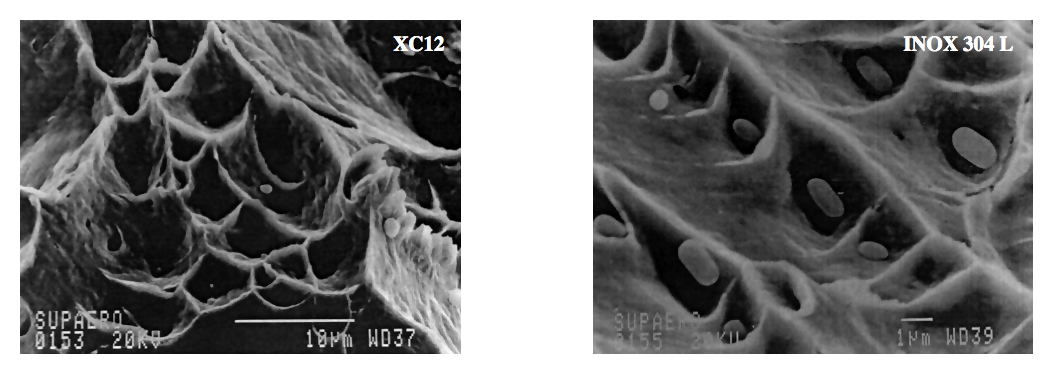
Macroscopically, ductile fractures are always characterized by the presence of a plastically strained zone. They reveal a dull surface, often in relief and, if the stress is a tensile load, they include a necking zone. There is no precise initiation zone or direction of propagation. Microscopically, the fracture surface, which is generally oriented, shows numerous dimples as well as inclusions possibly. These fractures are transgranular (see figure).
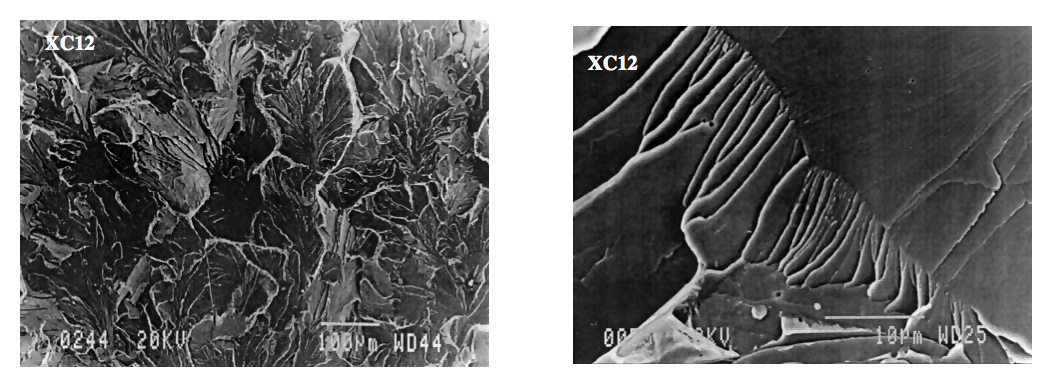
Brittle fractures by cleavage are transgranular but never show any plastic deformation. Their surface is flat and shiny. There is no identifiable initiation zone or direction of propagation. At the microscopic scale, we note the presence of cleavage planes and ridges (see figure)
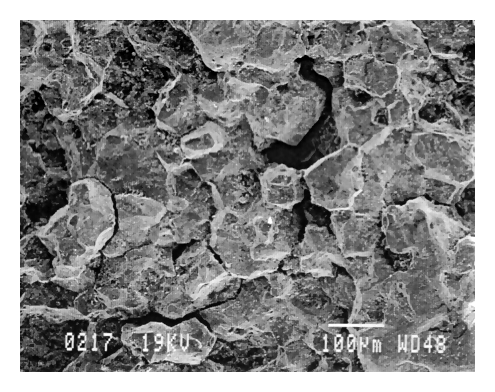
Free from plastic deformation, brittle fractures by decohesion present a globally planar appearance with no sign of initiation zone or direction of propagation. At the microscopic scale, they show, because they are intergranular, juxtaposed polyhedrons corresponding to the metallurgical grain boundaries that define the fracture surfaces. Brittle phases can appear at the surface of the fracture. Secondary cracks can often be observed as well (see figure).
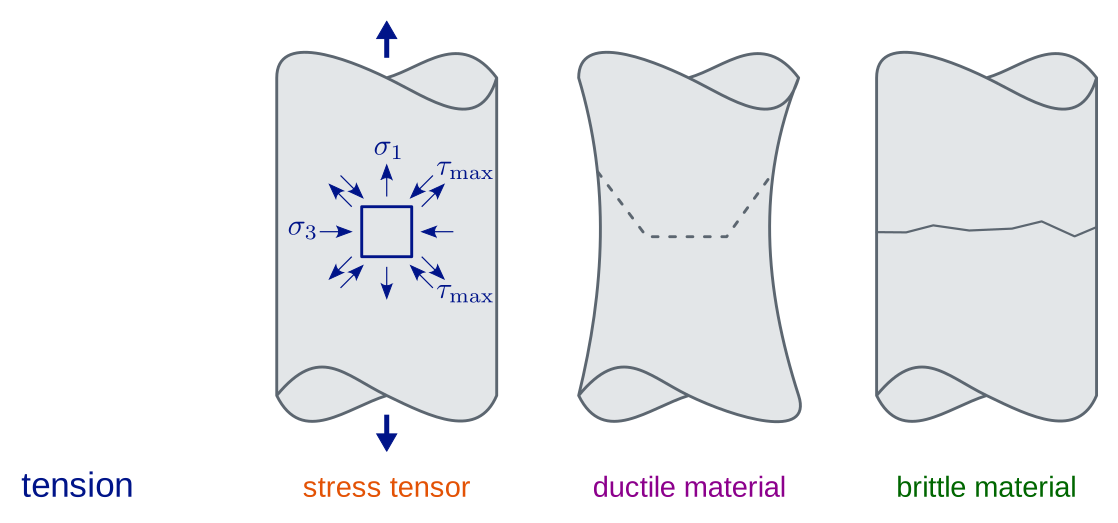
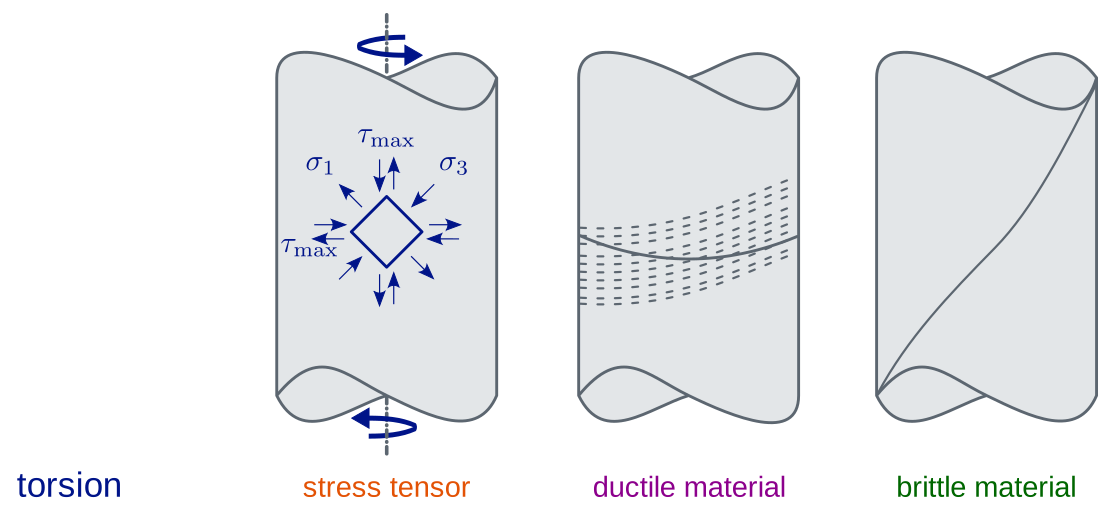
Depending on the type of stress and the ductile or brittle character of the material, the fracture surfaces of structural elements subjected to tension, compression, bending or torsion are specific, in relation to the stress tensor characteristic for each type of load.
In tension:
ductile material: shear stresses are responsible for the fracture that is initiated near the centre and propagates toward the surface, revealing shear lips in certain circumstances
brittle material: the fracture is perpendicular to the axis of tensile stress. in the absence of stress concentration \(K_t\), distribution of stresses is homogeneous and initiation is random
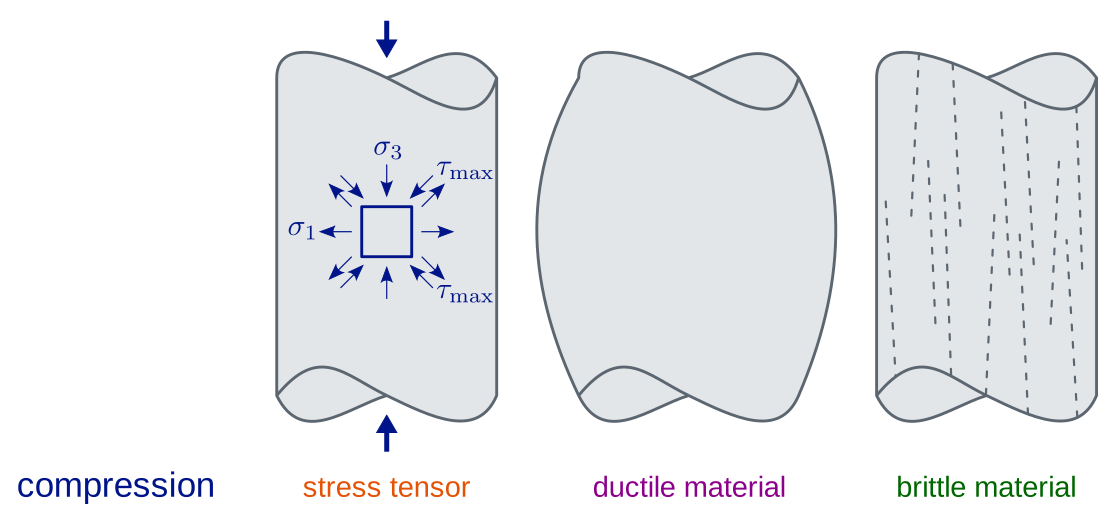
In compression:
ductile material: shear stresses are responsible for damage but fracture occurs rarely (barrel shape)
brittle material: the fracture is perpendicular to the direction of maximum normal stresses, parallel to the axis of compression and initiation is random
In torsion:
ductile material: shear stresses are responsible for significant deformation and the fracture is perpendicular to the axis of torsion, torsional twisting that reflects the occurrence of significant plastic deformation is generally observed on the part.
brittle material: the fracture is helical and occurs at \({45}{°}\) to the axis of torsion, parallel to the axis of compression and initiation is random
in both cases, the fracture initiates on the surface in relation to the distribution of stresses.
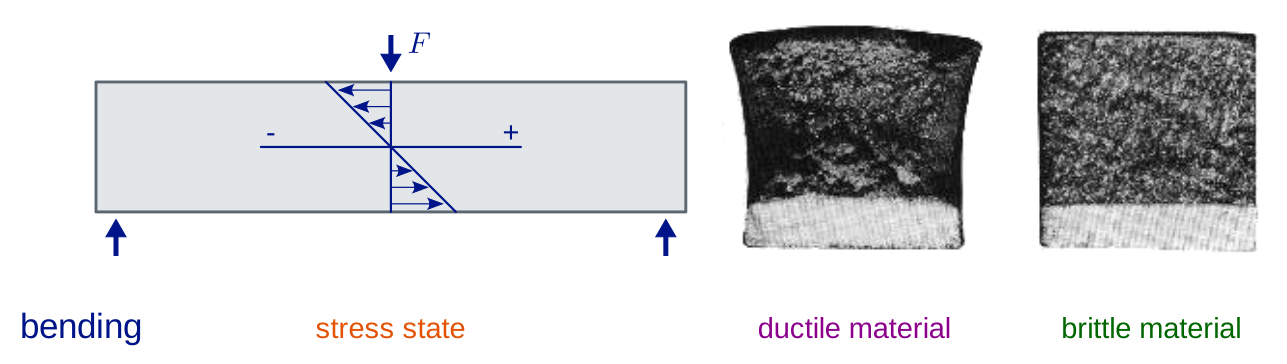
In bending:
this is a combination of tension and compression, the crack initiates in the fibre under tensile load
ductile material: plastic deformation is significant and the fracture surface is generally not flat
brittle material: the fracture occurs without any plastic deformation and the fracture surface is excessively flat
the clearest example of flexion fracture surfaces is probably that of a ferritic or martensitic steel test piece ruptured using a Charpy test at either side of its ductile-to-brittle transition temperature