Substitutional Solid Solutions
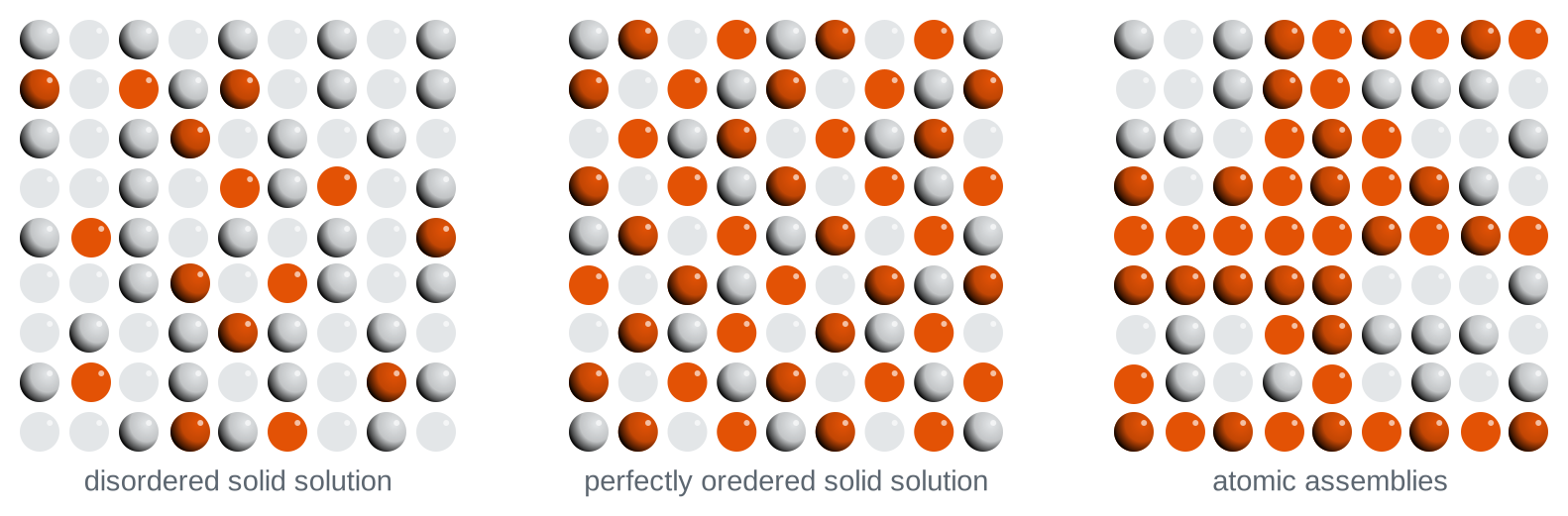
Most solid solutions are substitutional solid solutions: the foreign atoms occupy a fraction of the lattice sites in place of the base atoms. The crystalline structure is generally unchanged but the lattice parameter varies with the concentration of foreign atoms. The base atoms and those of the alloying element may be distributed randomly across the various sites of the lattice, in which case the solution is known as disordered. This is the case when the two constituent elements are perfectly equivalent (same crystalline structure and near-identical atomic dimensions). In other cases, there is a greater or lesser tendency towards the acquisition of an order (ordered solution), or towards a grouping of atoms of the same type, as shown in the figure below.