Principle
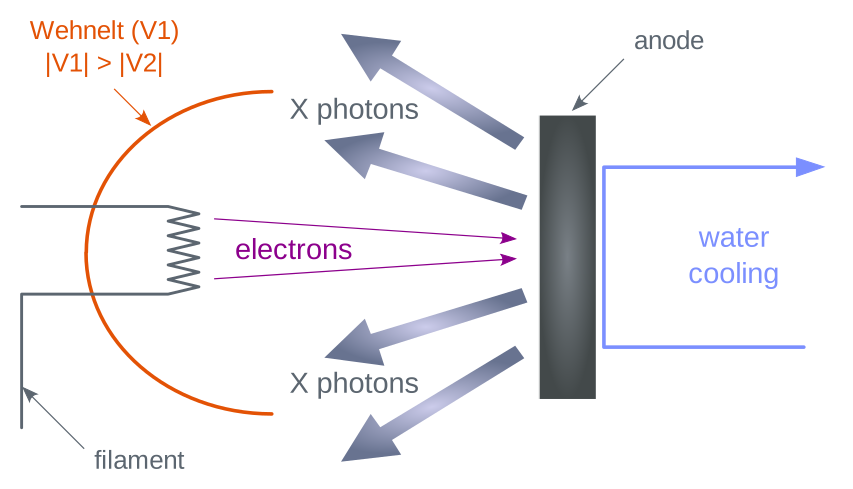
X-rays are produced by the interaction of electrons with a metal target (see diagram). Electrons are emitted by a filament heated by Joule effect (thermal electron). These electrons are accelerated by a difference of potential and guided toward a metal target (anode or anticathode). Production of X-ray photons is caused by the rapid deceleration of electrons as they hit the target. Note that the yield of X-rays produced is low, typically around 0.2%; the remainder of the energy is dissipated as heat. It is therefore necessary to evacuate this heat (cooling system is needed) and to use target materials that are efficient thermal conductors with a high melting temperature (refractory metals as tungsten or molybdenum or very good conductors as copper).