Crack initiation, propagation and failure analysis
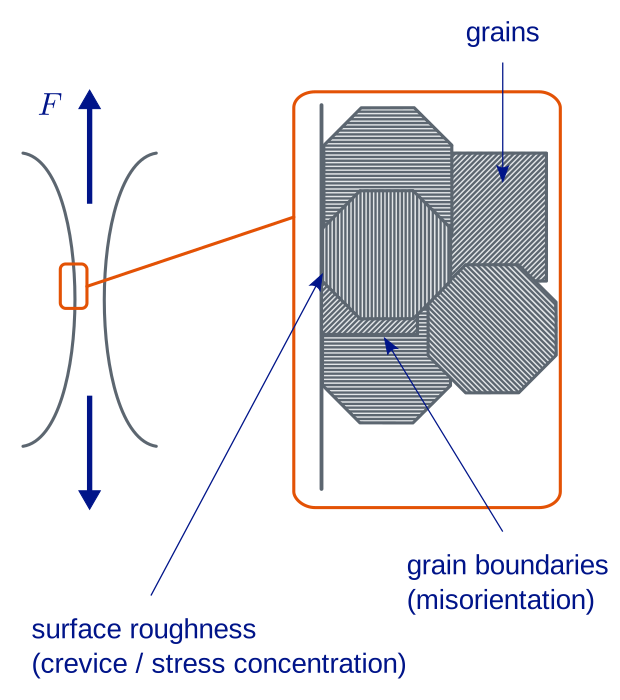
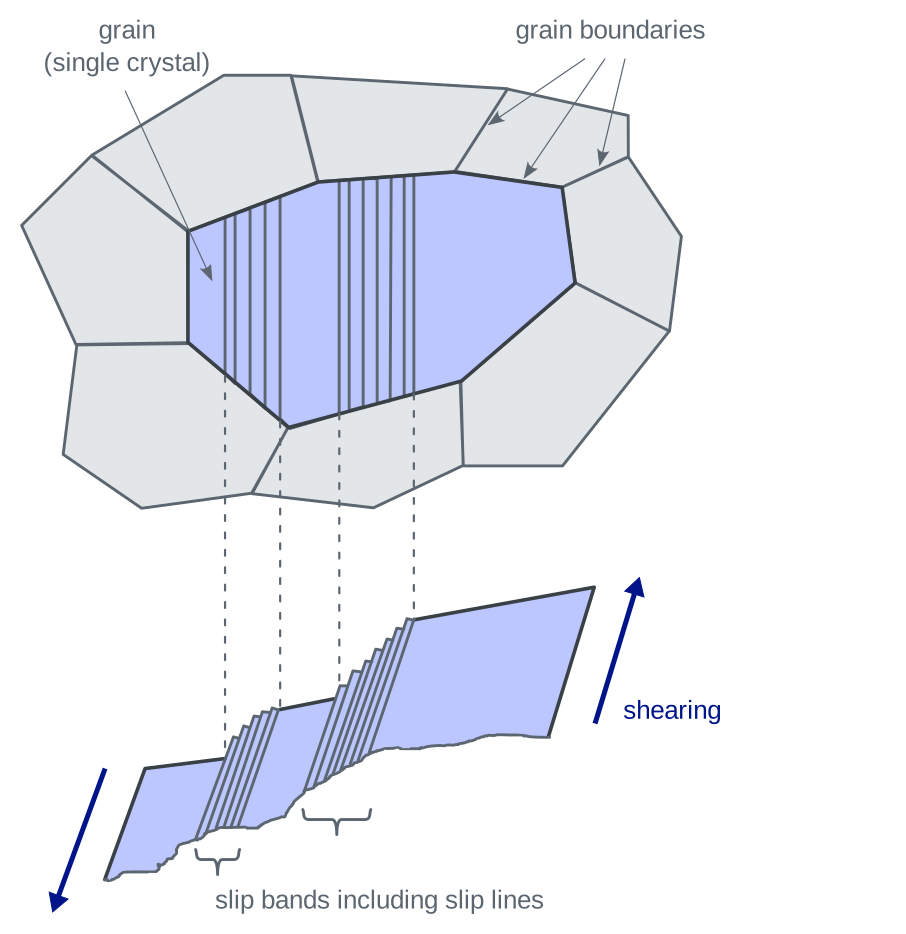
Analysis of fatigue failure surfaces provides enormous amounts of information. We can generally distinguish three zones, corresponding respectively to the successive phases of initiation, stable propagation and sudden final fracture. Experimentally, it is often difficult to know exactly what the crack initiation mechanisms are. Initiation generally takes place on the surface of the material or at interfaces, for example between matrix and inclusions or along grain boundaries. At the surface of the material, local plastic instabilities are liable to form. Deformation is located in slip bands and the material suffers intrusion (metal pushes inwards) and extrusion (metal pushes outward) phenomena that give rise to a sawtooth surface favourable for generating a stress concentration. Immediately following initiation, a first stage of purely crystallographic propagation occurs along the atomic planes in the material. We generally consider that the region encompassing the initiation and the most initial stage of propagation extends to cover, in line with the resolution of the experimental techniques enabling it to be observed, a handful of metallurgical grains.
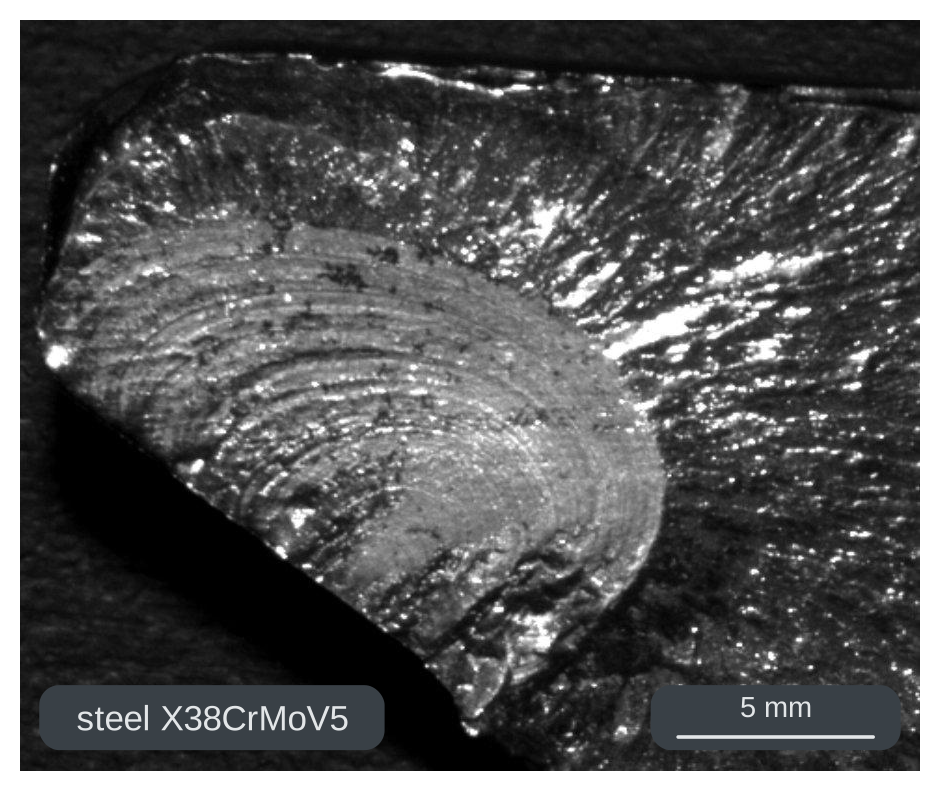
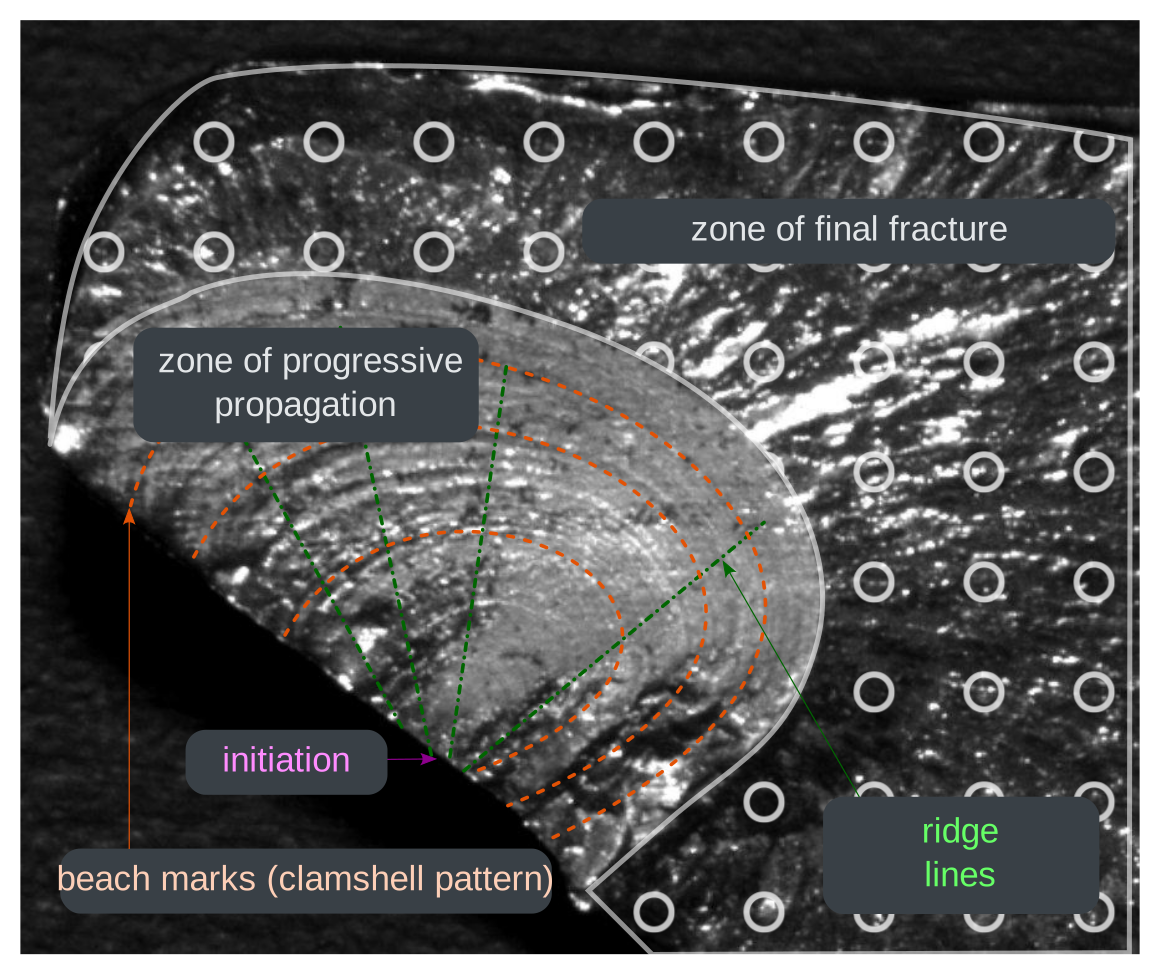
Beyond this, propagation continues with a transgranular character, always remaining slow and stable. The surface of the fracture is essentially flat with a smooth and silky appearance. Macroscopically, it is possible to distinguish in this region (see the following figure):
beachmarks (also called clamshell marks). These correspond to macro-cycles the material is subject to during the various operational actions the part undergoes, and they represent precisely the instants when the crack halts upon interrupted loading. Note also that these beachmarks are invisible if the structure is subject to strain in a vacuum, so their presence likely results from oxidation phenomena
ridges (or radial marks). These reflect a measure of divergence from perfect flatness in the fracture surfaces by marking the propagation of the crack along adjacent crystalline planes, which are globally parallel but offset compared to one another.
By tracing back the beachmarks and ridges it is in theory possible to precisely determine the initiation zone.
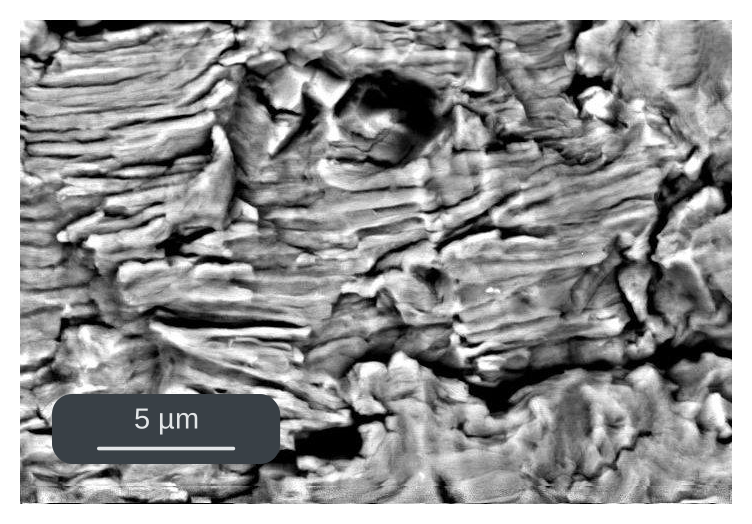
At the microscopic scale, it is possible to observe striations (following figures) that here also relate to oxidation of the crack front. Each striation corresponds to a fatigue cycle, they therefore reflect elementary advance of the crack during its overall propagation. Analysis to count fatigue striations provides valuable information about the behaviour of the material. For example, it is possible through a detailed failure analysis to determine the crack propagation rate or make a critical comparison of the history of the fracture in the material against the mechanical loading it is supposed to have been subjected to.
During the slow and stable propagation phase, obeying Paris' Law, the crack size and the local stress at the crack tip both increase. The same applies to the stress intensity factor. Once this reaches its threshold value, the material toughness, the crack propagates in a sudden manner. This propagation, leading to catastrophic fracture of the material, occurs almost instantly and at the speed of sound within the material (3000 to \({5000}{\rm \, m.s^{-1}}\)). The final fracture surfaces, ductile, show a rough aspect that is very easy to distinguish from that of the slow and stable propagation region (following figures).